
Inhaltsübersicht
The Art of Thawing
Why 0-4°C is the First Line of Defense for Squid Freshness
For premium squid, thawing is not a passive waiting game—it’s the first and most critical active defense for preserving freshness. The optimal method requires a strict 0-4°C refrigerated environment. The core science lies in protecting cellular integrity through a slow phase change, thereby maximizing moisture and flavor retention.
At Angfa, we enforce this through three non-negotiable protocols: sealed packaging, elevated placement, and controlled airflow. This article details how this low-temperature thawing process forms the foundation of guaranteed squid quality.
The main elements of the regulation are detailed below.
- The Core Science: Why 0-4°C is key to cell moisture retention and texture.
- Three Critical Protocols: How sealing, elevation, and airflow work in unison.
- Your Advantage: How this translates to higher yield and consistent quality for your kitchen or production line.
Chapter 1: The Core Science – Why 0-4°C is the Golden Rule of Thawing?
Many thawing methods compromise quality. Rapid or warm temperature thawing causes internal ice crystals to melt too quickly, rupturing cell walls and leading to excessive drip loss. This is the primary cause of tough texture and diminished flavor.
Cellular Defense: The Power of a Slow Phase Change
Angfa’s 0-4°C slow thawing allows ice crystals to gradually and safely transition back to water. This gentle process minimizes physical damage to the muscle cell structure.
The Result: Supreme Moisture Retention & Native Texture
Intact cell structure means water is locked within the cells. The direct outcome is our baby squid cooking to a tender, juicy, and elastic texture reminiscent of near fresh catch, never dry or fibrous.
Chapter 2: Angfa's Triple Defense Protocol – Practices Beyond the Ordinary
Temperature control alone is insufficient for perfect thawing. Our triple protocol ensures every batch experiences an identical and pristine thawing environment.
Protocol 1: Thawing in Sealed Packaging
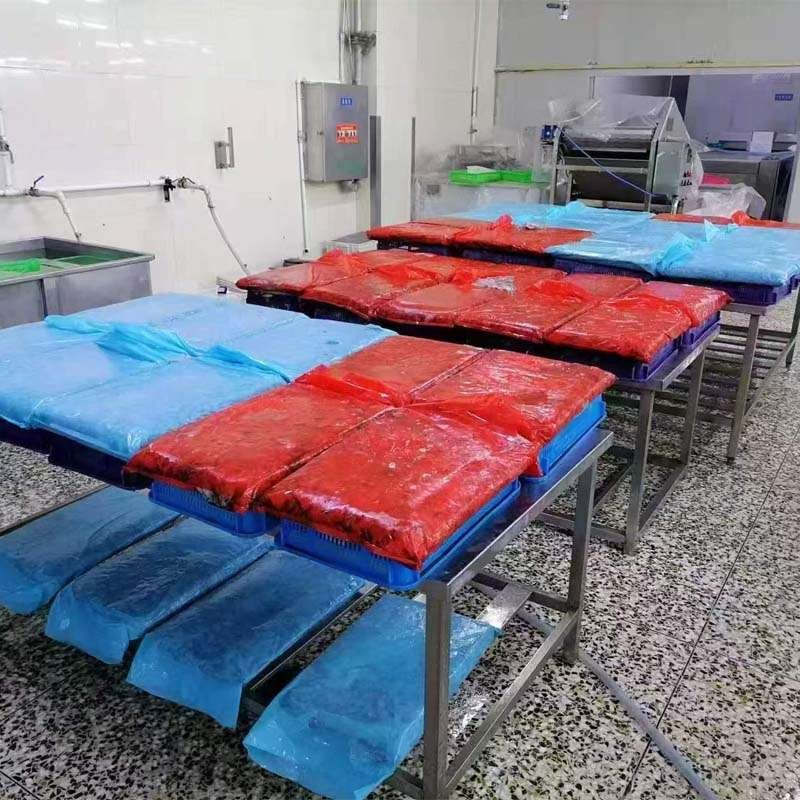
All products are thawed in their original, sealed packaging.
- Prevents Contamination & Odor Transfer: Ensures the squid’s delicate flavor remains pure and unaffected.
- Locks in Volatile Aromatics: The sealed environment traps natural juices and flavor compounds, preventing the loss of essential “freshness”.
Protocol 2: Mandatory Elevated Placement
All thawing products are placed on dedicated racks, strictly off the floor.
- Ensures Uniform Airflow: This is the invisible key to even thawing. Elevation allows cold air to circulate 360 degrees around every package.
- Eliminates Micro-Environments: Prevents bottom packages from thawing unevenly or developing condensation, guaranteeing identical conditions for every kilogram.
Protocol 3: Controlled Air Circulation System
Our thawing rooms are equipped with professionally designed circulation for stable, controlled airflow.
- Eliminates Temperature Fluctuations: Active airflow prevents stratification of static cold air, maintaining a constant temperature.
- Enhances Efficiency & Consistency: While adhering to the “slow” principle, airflow makes the process more efficient and predictable, removing localized temperature variables.
Conclusion: Science Based Defense for Non-Negotiable Freshness
At Angfa, we believe premium quality is built on visible transparency and invisible discipline. The thawing room is where this philosophy first comes to life: controlling every variable, guided by science.
Choosing Angfa baby squid means selecting more than an ingredient. You select a complete process engineered to defend freshness at the cellular level, ensuring what arrives in your kitchen is a guaranteed sensory experience.
FAQ
Why is thawing at 0-4°C so critical for squid? Canot I just thaw it faster at room temperature or in water?
A: This is the first line of defense for preserving freshness. Rapid thawing in warm water or at room temperature causes internal ice crystals to melt too quickly, puncturing the cell walls and leading to significant drip loss (of both flavor and moisture), resulting in a tough and fibrous texture. The 0-4°C low-temperature environment enables a slow phase change, allowing ice crystals to melt safely and gradually. This maximizes the protection of the muscle cell structure’s integrity, locking in both moisture and native flavor.
FAQ
What is the direct business advantage for me (the buyer) in using your slow-thawing method?
A: This translates directly into higher yield and consistent quality. An intact cell structure means less drip loss before cooking (higher net weight) and results in tender, juicy, and elastic flesh after cooking. This ensures your dishes or processed products deliver consistent premium texture and appearance every time, reducing waste and enhancing the value of the final product.
FAQ
Your “Triple Defense Protocol” seems very specific. How do I implement “elevated placement” and “controlled airflow” in my own kitchen/facility?
A: You can apply these principles in your own operation:
Thaw in Sealed Packaging: Always thaw within the original, factory-sealed packaging. This is crucial to prevent cross-contamination and flavor transfer.
Elevated Placement: Place products on shelves or pallets to ensure airflow underneath, preventing condensation or uneven thawing caused by contact with cold surfaces.
Ensure Air Circulation: Make sure the cold air in your refrigerator or cold room can circulate evenly to avoid stratification of static air. A simple practice is to avoid overcrowding and allow space for airflow.
FAQ
Does this slow-thawing process take much longer?
A: Yes, low-temperature thawing requires advanced planning (typically 24 hours or more, depending on product volume). We do not view this as “downtime” but as a necessary, active quality-assurance step.


