New EU Regulation: Updated Limits for Arsenic Levels in Fish and Seafood
On September 17, 2025, the European Commission issued Regulation (EU) 2025/1891, amending the maximum permitted levels of inorganic arsenic in fish and other seafood under Regulation (EU) 2023/915. The regulation entered into force on the twentieth day following its publication, meaning it will apply from October 8, 2025. All fish and seafood products placed on the EU market must comply with the new arsenic limits.
Arsenic is a metalloid naturally present in the environment and enters the human body mainly through food and drinking water. Long-term intake of inorganic arsenic is associated with health risks such as lung, bladder, and skin cancers. In its latest 2024 assessment, the European Food Safety Authority (EFSA) confirmed these risks, prompting the EU to set stricter limits for arsenic in seafood.
Key Provisions of the New Regulation
Scope
The new regulation applies to all fish, crustaceans, bivalve molluscs, cephalopods, and other seafood sold on the EU market. This includes not only fresh products but also dried, diluted, processed, or compound foods.
Arsenic Limit Values (by Category)
The following are the maximum permitted levels of inorganic arsenic (AsⅢ + AsⅤ) for each category of seafood (in mg/kg, wet weight):
| Product Category | Subcategory | Maximum Limit (mg/kg) |
|---|
Fish muscle meat | Other species not listed below | 0.10 |
| | Anglerfish, flatfish, giant stargazer, haddock, herring, ray, and shark | 0.50 |
Crustaceans | Crabs, prawns, and shrimps | 0.10 |
| | Other crustaceans (except lobsters) | 0.20 |
| | Langoustine and rock lobster | 1.5 |
| Bivalve molluscs | Scallops | 0.10 |
| | Other bivalve molluscs | 0.50 |
Cephalopods | All species (without viscera) | 0.05 |
| Salt | Food-grade salt | 0.50 (total arsenic) |
Effective Date and Transition Period
The regulation applies from October 8, 2025. Products lawfully placed on the market before this date may remain on the market until their “date of minimum durability” or “use-by date” to avoid food waste.
Supplier Action Plan: Control Arsenic Levels from Raw Materials
1. Risk Assessment at the Procurement Stage
When sourcing seafood raw materials, prioritize suppliers from regions with low arsenic contamination and request recent arsenic test reports.
2. Establish Internal Testing System
Conduct inorganic arsenic testing for each batch of raw materials to ensure compliance with the new EU limits. Pay special attention to high-risk categories such as:
Deep-sea fish (e.g., shark, ray)
Lobster-type crustaceans
Bivalve molluscs (except scallops)
3. Record Keeping and Traceability
Maintain all test reports, procurement documents, and production records to ensure full traceability and facilitate official inspections or customer inquiries.
4. Collaborate with Accredited Laboratories
Work with EU-accredited laboratories to regularly verify arsenic levels and ensure testing methods comply with EU standards.
Summary
EU regulations on arsenic in seafood are becoming increasingly strict. We must start control from the raw material stage, establish a robust testing and traceability system, and ensure continuous compliance to protect consumer safety and maintain market trust.
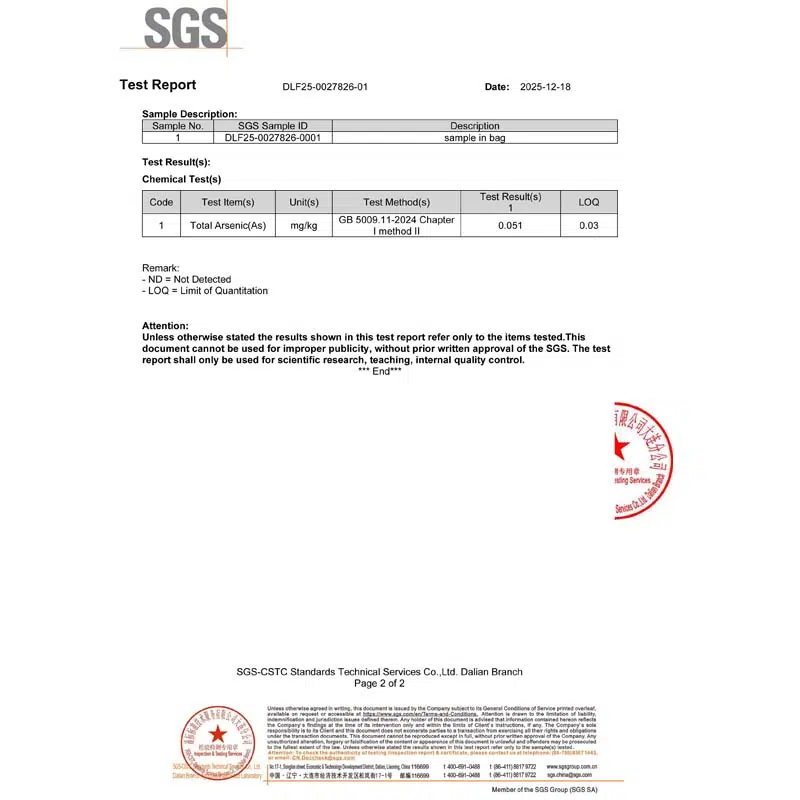
Our company urges suppliers to strictly enforce the above mentioned regulations and has conducted monitoring of the products(Surimi) to ensure compliance with the laws.